
Displaying property listings online is crucial in real estate today, and IDX (Internet Data Exchange) is extremely valuable in making this happen. A study by the National Association of Realtors (NAR) found that the internet is crucial for homebuyers of all ages, with 97% using it to find homes.
Realtors and brokers rely on the Multiple Listing Service (MLS) for sharing property info, and IDX helps integrate MLS listings into your website.
Are you curious about how IDX improves your website with MLS listings? Here’s what you need to know.
What Is IDX Exchange?
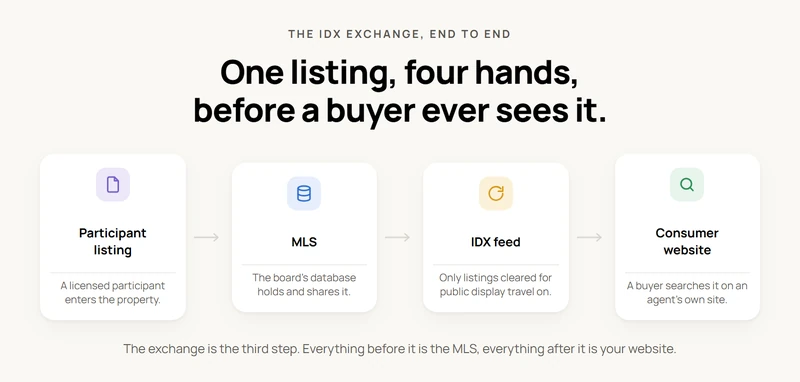
IDX, created by the National Association of REALTORS®, is a policy under which brokers exchange permission to share and show each other’s listings online. It’s also called Broker Reciprocity, showing how brokers work together.
Even though IDX is a policy, it’s often used to discuss the list of properties from an MLS System. It also refers to the rules about how the property information is shown, which can differ for each MLS® System.
The History of IDX
Now that you know what IDX is, you need to know that before it’s appearance, only Realtors with access to the MLS could provide property information to consumers. This situation made the search process slow and inefficient.
With the growth of the internet, IDX was created to enable direct access to property listings, empowering consumers to search independently.
In the early 2000s, NAR formed a work group to improve real estate applications on the internet for better client service while preventing misuse.
As a result, NAR first adopted the IDX policy in May 2000, and it has been revised many times since. The rules keep changing, so the version your board uses today is the one that counts. For the latest NAR change and what it means for who can show listings, read What are IDX, MLS, RETS and RESO API. Then ask your MLS for its current IDX rules in writing.
How Does IDX Work with MLS?
When a real estate agent adds a property to the MLS, it becomes available through a data feed for other MLS agents to use on their websites.
Initially, each MLS board had its own data feed, but they are now consolidating to create larger feeds, combining all area listings without merging the associations.

Most MLS boards have adopted the IDX system, making buying and selling property easier for consumers.
Integrating an IDX/Data feed into your realtor website is essential nowadays. The chosen option should ensure automatic listing updates and provide various ways to showcase your listings and others.
To fully utilize the potential of IDX for your real estate business, explore how MLSImport can assist in creating a robust real estate website.
Working in Canada? IDX works a little differently there. Some boards run their own IDX program, and CREA runs a national feed called DDF. Only Canadian REALTORS® can get DDF, and it carries Canadian listings only. See DDF vs IDX for a Canadian realtor website to learn which one your site needs, and how to use CREA DDF on WordPress.
How does IDX put MLS listings on a brokerage website?
IDX puts MLS listings on a brokerage website in five steps. The broker gets IDX approval from the MLS, a vendor or plugin pulls the listing feed, the listings show up on the site, they update on a schedule, and the site follows the board’s display rules. The paperwork comes first. The software comes last.
- Your broker gets approved. The MLS gives IDX rights to the participant. That is usually the broker, not each agent. Your broker signs the MLS’s IDX agreement. Some boards also charge a fee.
- You pick how the listings will reach your site. You can use a hosted IDX vendor, or a WordPress plugin that pulls the listings into your own site. Most boards make the vendor apply too, or put your broker’s signature on the vendor’s request.
- The MLS hands over the feed. The feed is the stream of listing data: price, photos, status and remarks. Today most MLSs send it through the RESO Web API. (That is the modern standard your developer or plugin plugs into.)
- The listings show up on your site. They show up either inside a frame from the vendor or as real pages on your own domain. The table below shows the difference.
- The listings keep updating. New, sold and withdrawn listings change on a schedule. Many boards want updates at least every 12 hours. Check your board’s number.
| Framed or vendor-hosted IDX | Listings on your own domain | |
|---|---|---|
| Where listings live | The vendor’s servers | Your website’s database |
| Listing page address | Inside a frame or on a subdomain | yoursite.com/property/123-main-street |
| Who Google credits | Mostly the vendor | Your site |
| Setup | Paste a code. Fast. | Install a plugin, enter your feed details, pick fields, test |
| If you cancel | The listings leave with the vendor | The pages stay. Updates stop. |
MLS Import is our own plugin, so keep that in mind. It takes the second route on WordPress. It costs $49 a month or $504 a year, with a 30-day free trial. It connects one MLS per site, and it checks for listing changes every hour and for removed listings daily. It brings the records in as property posts, and your theme or MLS Import’s Standalone mode shows them to buyers. It cannot get MLS approval for you. Your broker does that step with the board. Who signs is explained in Who needs to hold the credentials, and the full setup is in How to connect your website to your MLS. See what MLS Import does and how it works.
Not sure which kind of IDX your brokerage has now? Open a listing page, right-click, pick View Page Source, and search for the street address. If all you find is an iframe tag pointing to another site, the listing belongs to the vendor. More checks are in import vs live IDX.
Which are the terms commonly used in relation to IDX?
IDX agreement / IDX Real Estate License
An IDX (Internet Data Exchange) agreement is a contractual agreement between a real estate agent or broker and a Multiple Listing Service (MLS) outlining the terms and conditions for the agent or broker to display MLS listing data on their website.
This agreement typically specifies the rules and guidelines for how the agent can use the IDX data, including displaying property listings and using MLS information for marketing purposes.
The IDX agreement often includes provisions related to data usage, data sharing, property display rules, and compliance with MLS regulations.
It also outlines the responsibilities of the agent or broker in maintaining the accuracy and integrity of the MLS data displayed on their website.
Additionally, the agreement may cover aspects such as the duration of the contract, any fees associated with IDX usage, and the obligations of the agent or broker to adhere to specific IDX policies set by the MLS.
IDX compliance standards
IDX compliance standards are regulations real estate agents, and brokers must follow when showing MLS data on their websites.
These rules guarantee that the data is used correctly and meets industry and legal standards. They cover data accuracy, usage, property display, and consumer privacy protection.
Adhering to these standards maintains data integrity, builds client trust, and promotes ethical practices in the real estate industry.
IDX feed / IDX data feed
An IDX feed, or IDX data feed, is a stream of real estate listing data from an MLS given to agents for their websites.
It allows agents to display current property listings in a standardized format. Using an IDX feed ensures website information stays updated and matches the MLS database, giving visitors accurate property details.
IDX information
IDX information includes real estate listings from an MLS, provided to agents for display on their websites.
It contains property details like prices, descriptions, and images, helping agents offer comprehensive and current listings to their website visitors and making property searches easier for potential buyers.
IDX listings
IDX listings are properties from real estate agents or brokers displayed on their websites using the Internet Data Exchange (IDX) system. These listings are part of the agreement and data feed provided by IDX.
They come from a Multiple Listing Service (MLS) and provide detailed information like pricing, property descriptions, and images to help potential buyers search for their new home.
These listings enable agents to offer a comprehensive view of available properties, making it easier for buyers to find and explore potential homes.
IDX website
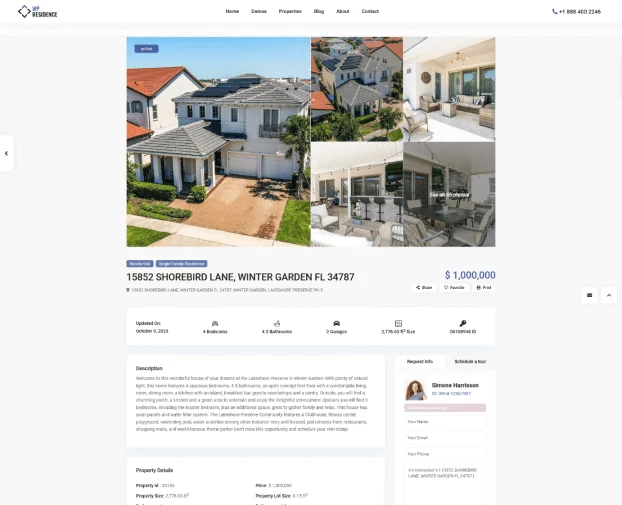
An IDX website is a real estate agent or broker’s site that uses IDX technology to show property listings from an MLS.
It helps agents offer visitors an up-to-date view of available properties on their site.
These sites often have advanced search options, making it more straightforward for users to find properties based on location, price, and features.
They aim to enhance the user experience and help potential buyers find properties that suit their needs.
IDX technology
IDX technology allows agents to display MLS property listings on their websites, making it convenient for potential buyers to explore available properties without leaving the agent’s site.
This integration enhances agents’ online presence and streamlines the property search process for their website visitors.
IDX plugin
IDX Plugin is a software component that integrates Internet Data Exchange (IDX) functionality into a real estate website. Since WordPress is the most used system for real estate websites – the IDX plugin often refers to a WordPress IDX plugin. MLS Import is an IDX plugin built on the RESO Web API.
Plugins differ a lot in how they get the data and what they cost, so it is worth comparing the main IDX plugin alternatives before committing to one.
IDX vendor
IDX vendor is a company that accesses the Multiple Listing Service (MLS) on behalf of a real estate agent, facilitating the integration of MLS listings onto the agent’s website. Vendors enable agents to display property listings while managing compliance with IDX standards and regulations.
What are the differences between MLS and IDX?
MLS stands for Multiple Listing Service
It is a particular database made and managed by real estate experts to assist their clients in searching, buying, and selling property. We have a complete guide: The Ultimate Guide: What is Multiple Listing Service ( MLS ) in Real Estate and How Does It Work?
IDX listings usually come from MLS Systems, which can serve one or multiple associations or boards. REALTORS associations or brokers might own these systems or operate independently.
A single board system shows how that works in one market, for example the San Diego Multiple Listing Service (SDMLS).
They can cover anything from a single city or county to large regions. For additional information about MLS® Systems, you can visit the National Association of REALTORS® website.
IDX (Internet Data Exchange)
Is the policy that enables real estate agents to display MLS (Multiple Listing Service) data on their websites, making it easily accessible to potential buyers who visit their sites.
Integrating IDX with each MLS helps agents expand their reach to a broader audience and offer valuable information to individuals interested in buying or selling real estate.
What are the technologies used for Internet Data Exchange (IDX) Technologies
Four main technologies are used to deliver IDX listings: RESO Web API, IDX Framing, FTP, and RETS. Each technique employs distinct approaches to accessing Multiple Listing Service (MLS) data and incorporating listings, bringing their advantages and limitations.
RESO Web API
The RESO Web API represents the latest advancement in IDX technology. It employs an Application Programming Interface (API) to retrieve listings directly from an MLS and display or replicate them on a real estate agent’s website.
iFrame
IDX framing (HTML iframe) involves displaying listings from external websites through a framed design feature on your site. It is a straightforward and quick way to integrate IDX, but it lacks Search Engine Optimization (SEO) capabilities and the possibility to create a custom web page.
FTP (File Transfer Protocol)
FTP stores listings directly on your website server; however, the data transfer process of FTP can be cumbersome and inefficient. Complete file downloads are necessary for each synchronization, limiting the frequency of updates and potentially resulting in outdated information on your site.
RETS (Real Estate Transaction Standard)
RETS is an old standardized IDX technology that facilitates the exchange of real estate, but it is challenging to maintain. Newer technologies such as RESO Web API have replaced RETS nowadays for most MLS.
What are the Benefits of IDX for your business?
Despite the strict rules, IDX is very useful for real estate agents, and it’s a win-win for agents and people searching for homes.
- Agents and brokers can show the best houses on their websites to attract buyers.
- Buyers can see the newest homes on the market and trust that the information is correct.
Those who don’t use IDX might miss out on capturing leads or struggle to compete in the market.
Here are a few other advantages of using IDX:
- Let agents show more houses on their websites: Showing MLS listings helps agents attract clients searching for properties online, leading to more potential leads and sales.
- MLS listings make the website seem more trustworthy: It shows potential clients that agents are reliable and have access to up-to-date property information.
- Streamlined workflow: IDX’s newest technologies, like RESO WEB API, automate the process of updating websites with new listings, freeing up agents’ time to focus on other important tasks like marketing and client service.
Homebuyers frequently ask their agents to explain what IDX is and why it’s important for their property search. We have a more detailed article about What Are the Benefits and Advantages of Using Multiple Listings Service(MLS)
IDX Listing Display Options for Brokers and Agents
You don’t have to do anything when your MLS starts using the IDX program. The system assumes you agree to display your listings.
If you prefer not to show your listings to others, you can inform the MLS that you’re withholding your consent.
Some MLSs require you to actively choose to participate, while others assume you’re in by default. Whether it’s “opt-in” or “opt-out” depends on your local MLS’s decision.
For brokers in the program, the following options are available for displaying IDX data on their website:
- Download data from the MLS to create and manage a broker-owned website with compliant display pages.
- Employ an external consultant or an approved third-party vendor to integrate IDX listings through an IDX Plugin.
Among these options, the most cost-effective is the first one, with MLS Import as a helpful plugin for downloading and syncing MLS data. Supported themes ensure the necessary real estate functionality and smooth operation.
Agents can also have IDX websites provided they adhere to specific guidelines:
- The agent’s designated broker must be opted into the program.
- The agent must obtain their broker’s consent and prominently display the brokerage brand and logo.
What are the Industry Rules for Using the IDX System?
The IDX platform has specific rules governed by the National Association of Realtors (NAR). Here, you can read the detailed guide on NAR’s IDX regulations.
While it can boost business, violating IDX rules can have serious consequences. Some activities that may lead to legal problems include:
- IDX listings should only be used for IDX display.
- If sellers don’t want property addresses online, agents should respect their wishes and not display them on IDX.
- IDX displays can be based on location, price, property type, etc.
- The MLS data should be updated every 12 hours.
- NAR emphasizes that IDX displays cannot distribute MLS data to anyone else except as outlined in the policy.
- Participants must identify their brokerage while showing IDX content with distinct colors and typeface.
- Participants should be open to feedback about listing accuracy and correct any false information provided by the listing broker/agent, except for opinions or professional judgment.
- Participants cannot share IDX listings with external parties outside the IDX exchange.
- Participants cannot modify information to make listings more attractive.
Agents and realtors must follow these rules to uphold their professional integrity and reputation.
What happens if someone abuses IDX?
If someone misuses IDX, the MLS association will take appropriate action. Offenders will be notified and asked to correct the problem. Failure to comply can lead to disciplinary measures per MLS Rules and Regulations.
How to Get an Affordable IDX Real Estate Website?
Many real estate professionals are often curious about what IDX is and how it can enhance their online property listings.
Creating a real estate website on a budget can be challenging, especially for startups watching every penny. Professional site design can be costly, and ongoing maintenance increases over time.
The good news is that you can have a functional and attractive real estate website without a hefty budget. Choose MLSImport for your IDX website needs.
We have two advanced guides: Building a Successful MLS Real Estate Website: A Comprehensive Guide to MLS Integration and How We Created a WordPress MLS Website with 8,000 Listings.
Utilizing WordPress, pre-built friendly themes with real estate functionality, and cost-effective IDX solutions like MLSImport can help you create a professional online presence without breaking the bank. Prioritize features that matter most to your business, and consider DIY options where feasible to save costs and ensure flexibility.
Disclaimer:
The views in this article are the author’s information provided is for general information only and should not be considered professional advice in real estate, legal, or accounting matters. Please consult your MLS providers for advice on certification, professional guidance, or legal procedures.
FAQ
Can my brokerage show other brokers’ listings on our website with IDX?
Yes. IDX lets a brokerage show other brokers’ MLS listings on its own website, not just its own. The brokers in your MLS agree to share their listings this way. A seller or listing broker can still opt out, either for all their listings or one at a time. Those listings will not show up in your feed.
Your broker has to sign the board’s IDX agreement first. After that, every page has to follow the board’s rules:
- Show the listing brokerage’s name on every listing, including search results.
- Show the MLS disclaimer and copyright line, word for word.
- Never change the listing details or photos.
- Take listings down when the board says they can no longer be shown.
The full checklist is in MLS/IDX compliance rules for WordPress sites.
How does IDX work with the MLS to keep listings on my website updated?
When a property is entered into the MLS, it becomes available through a data feed that other MLS participants can use for their websites under IDX rules. By integrating an IDX/data feed into your real estate website, your site can automatically receive listing updates so the information displayed stays aligned with the MLS database.
What is an IDX agreement (IDX license), and what does it typically cover?
An IDX agreement is a contract between an agent or broker and an MLS that spells out the terms for displaying MLS listing data on the agent or broker website. It typically addresses how the data can be used and displayed, compliance obligations (including accuracy and integrity of the data), and may also cover contract duration and any fees associated with IDX usage, depending on the MLS.
What technologies are used to deliver IDX listings, and why does iFrame IDX matter for SEO?
The article describes four common ways IDX listings are delivered: RESO Web API, IDX Framing (HTML iFrame), FTP, and RETS. iFrame-based IDX is usually the quickest to add, but it generally lacks SEO benefits and limits the ability to create a fully customized web page experience compared with approaches that retrieve or replicate listing data directly on your site (such as RESO Web API).
Can an individual agent run an IDX website, and what are the broker requirements?
Yes, agents can have IDX websites, but they must follow specific guidelines. The agent designated broker must be opted into the IDX program, and the agent must obtain the broker consent and prominently display the brokerage brand and logo while showing IDX content.
Does the brokerage showing a home also represent the seller?
No. A brokerage website can show a home listed by another brokerage. Look for the listing brokerage name near the home details. A contact form may send your message to the firm running the website. Ask who will receive it and who represents the seller.
Does the website show every home and every change right away?
No. Coverage depends on the MLS feed, display rules, and the site’s setup. Updates take time to reach a website. Ask an agent to check the current status before you plan a showing.